
Replacing a Single Breaker vs. Upgrading the Whole Panel: When Louisville Electricians Recommend Each
June 29, 2026
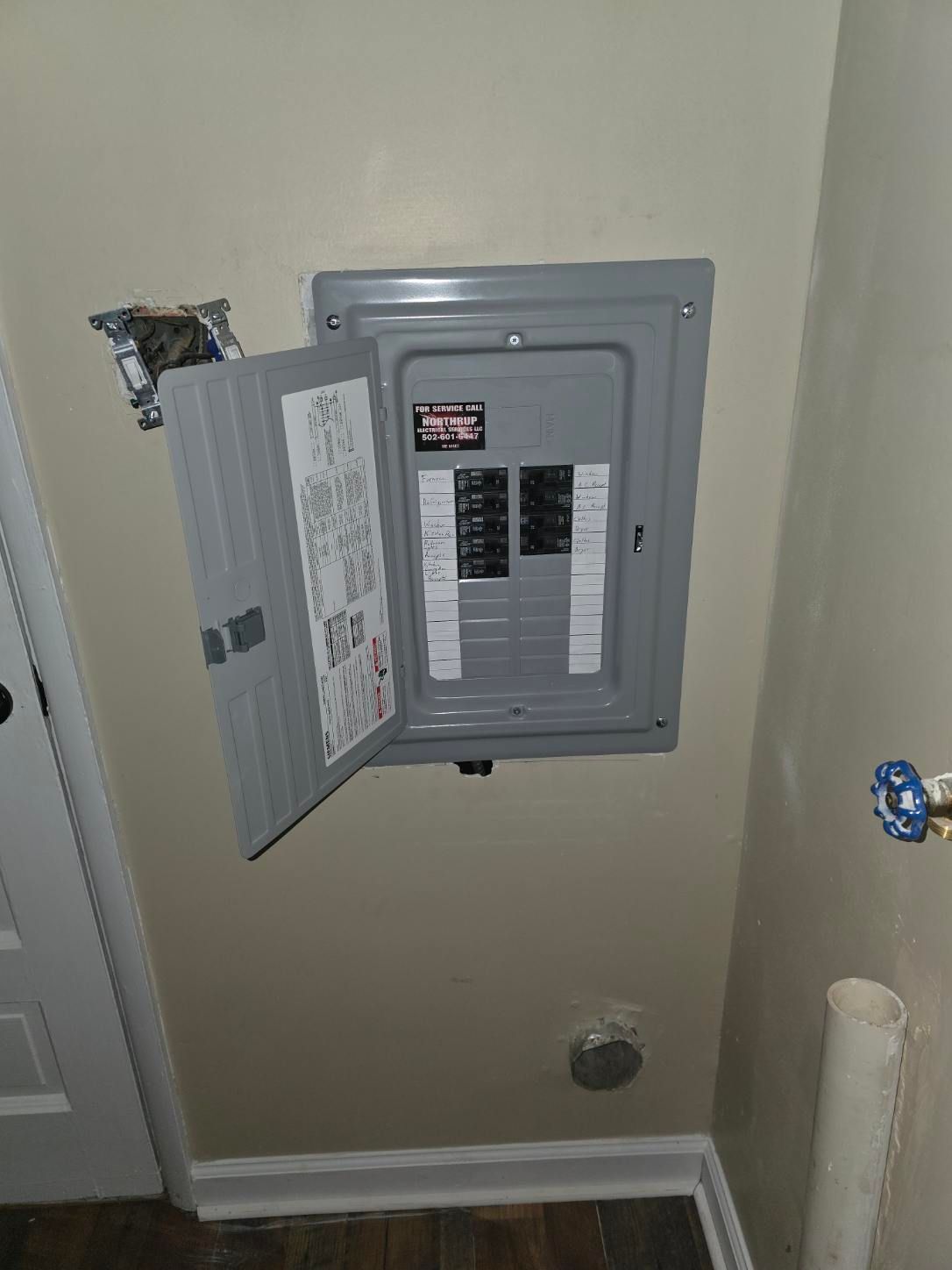
Your breaker tripped again. You reset it, it held for a day, and now it is off again. Maybe it is warm to the touch, or it has started tripping under loads that never used to bother it. You are already wondering whether you need to swap out that one breaker or whether something bigger is going on inside the panel itself.
That question matters more than most homeowners realize, because the wrong answer costs you either time or money, and in some cases both. A single breaker replacement runs a fraction of the price of a full panel upgrade, but putting a new breaker into a failing panel is like patching one shingle on a rotting roof deck. After inspecting hundreds of panels across the Louisville metro and surrounding Bullitt County areas, the pattern is consistent: the breaker is rarely the whole story.
What Is Actually Happening When a Breaker Fails
A circuit breaker does one job. It monitors current flowing through a circuit and interrupts that flow the moment it exceeds the breaker's rated amperage. When a breaker fails, it either trips too easily, fails to trip when it should, or stops resetting at all. Each of those failure modes points to a different problem.
The internal mechanism wears out over time. Most residential breakers are rated for around 30,000 to 40,000 trip operations, which sounds like a lot until you consider a breaker on a heavily loaded circuit in a home with aging wiring. Heat accelerates wear significantly. A breaker that runs warm because of a loose terminal connection or an undersized wire gauge will degrade in a fraction of that rated lifespan.
Secondary causes that homeowners frequently misread include:
Loose bus bar connections inside the panel, which cause arcing and heat damage that mimics a faulty breaker. A new breaker installed on a damaged bus bar slot will fail again within months.
Overloaded circuits that are drawing legitimate current. Replacing the breaker does not fix the underlying load problem. In older Louisville neighborhoods where homes were wired for the appliance loads of the 1970s or 1980s, original circuits often cannot support modern kitchen equipment, EV chargers, or home office setups.
Corrosion inside the panel. Kentucky's humid summers create conditions where moisture works into older service panels, particularly in garages, basements, and exterior utility areas.
How to Read the Signs Before Calling Anyone
Before you schedule a service call, check these things in order.
Note which circuit the breaker controls. If it is a dedicated circuit for one appliance, a failing breaker is more likely. If it is a general lighting or outlet circuit serving multiple rooms, load or wiring issues are more probable.
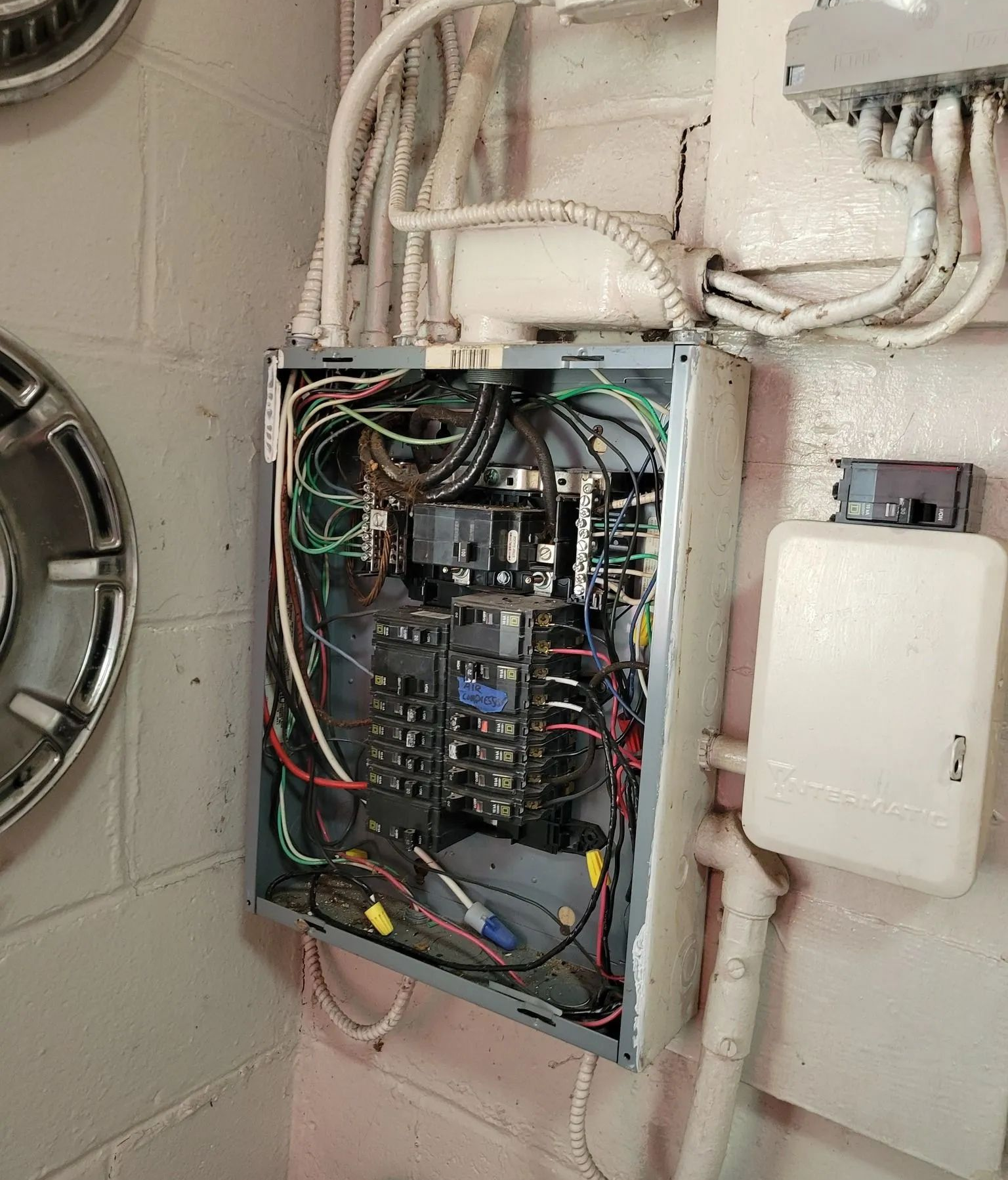
Look at the panel door and the breaker face. Discoloration, scorch marks, or a burning smell are not normal and mean you should stop touching anything and call a professional immediately.
Count how many breakers are double-tapped, meaning two wires share one breaker terminal. This is a code violation in most configurations and signals the panel was already being pushed beyond its design.
Check the panel age and brand. Certain panel brands manufactured between the 1950s and 1990s have documented failure histories that make a full upgrade the only responsible option regardless of whether individual breakers appear functional.
How to Read the Signs Before Calling Anyone
WARNING: If you open your panel cover and see any blackening, melted plastic, a burning odor, or hear a faint buzzing or crackling sound, close the cover and do not touch anything inside. These are signs of active arcing, which is a fire risk. This is not a situation for troubleshooting. Call a licensed electrician immediately.
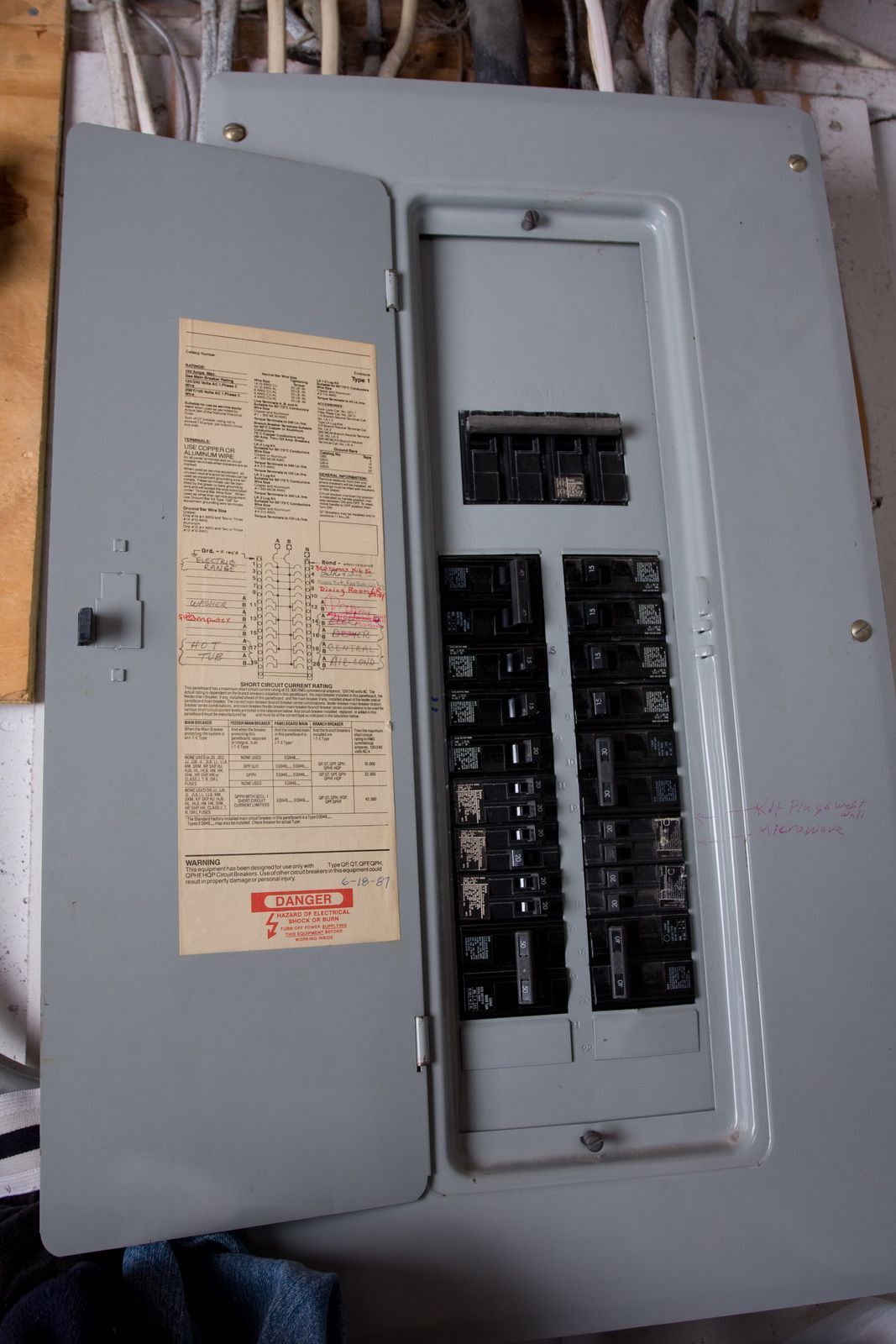
TIP: Take a photo of your panel before calling. A photo of the breaker labels, the panel brand, and the interior if you can safely take it gives your electrician enough information to arrive with the right materials and avoids a second trip for parts.
Single Breaker Replacement: When It Makes Sense
Replacing a single breaker is the right call when the panel itself is in sound condition, the bus bars are clean and undamaged, the wiring is properly sized, and only one breaker is showing signs of failure.
This is most common in panels that are less than 20 years old, have no documented brand defects, and have been maintained in a dry interior location. The repair is straightforward: the faulty breaker is removed, the replacement is matched to the exact amperage and panel brand, and the terminal connections are torqued to specification. Loose terminals are one of the leading causes of premature breaker failure, and this step is frequently skipped on rushed jobs.
On service calls we frequently find that homeowners have already bought a replacement breaker from a hardware store that is not brand-compatible with their panel. A generic breaker installed in a panel that requires a listed replacement for that specific manufacturer is a code violation in Kentucky and may void your homeowner's insurance coverage in the event of a fire.
A single breaker replacement makes the most sense when:
The panel is 20 years old or newer and in clean condition Only one circuit is affected and no other breakers show wear The panel has adequate capacity for your current and planned loads The bus bar slot the breaker occupies shows no heat damage or corrosion
Full Panel Upgrade: When One Breaker Is Not the Answer
A full panel upgrade replaces the entire service panel, typically moving from a 100 amp to a 200 amp service in most residential applications, and sometimes to 400 amp service for larger homes or those adding significant electrical loads.
Per National Electrical Code and Kentucky state electrical code requirements, a panel upgrade also brings the entire installation up to current standards, including proper grounding, bonding, and arc fault and ground fault protection on circuits that require it.
We recommend a full panel upgrade when any of the following apply:
| Condition | Reason a New Breaker Will Not Fix It |
|---|---|
| Panel is 30 or more years old | Internal components degrade system-wide, not just individual breakers |
| Panel brand has a known defect history | Replacement breakers may not resolve the underlying design problem |
| Multiple breakers tripping or failing | Points to a capacity or bus bar issue, not individual component wear |
| Visible corrosion or heat damage inside the panel | Damaged bus bars and wiring require full replacement |
| Home is adding an EV charger, hot tub, or addition | Existing service capacity likely insufficient for new loads |
| Double-tapped breakers are present | Signals the panel was undersized for the home's actual needs |
| Panel has fewer than two open slots | No room to add circuits safely without overloading existing ones |
Louisville and Shepherdsville homes built before 1990 account for a significant portion of the panel replacement work we handle each year. Many of these homes are still running on 100 amp service with original wiring that was not designed for the electrical demand of a modern household.
Diagnostic Summary: Matching Symptoms to the Right Repair
| What You Are Seeing | Most Likely Cause | Severity | First Step |
|---|---|---|---|
| One breaker trips repeatedly, others fine | Worn breaker or overloaded circuit | Medium | Check the load on that circuit before replacing |
| Breaker trips and will not reset | Internal failure or short on the circuit | High | Test the circuit for shorts before installing new breaker |
| Warm panel cover or breaker face | Loose connections or overloaded bus | High | Stop using the circuit and call an electrician |
| Burning smell near the panel | Arcing or insulation damage | High | Do not open the panel, call immediately |
| Multiple breakers tripping | Panel overload or failing main breaker | High | Full panel inspection required |
| Breaker trips only under heavy load | Undersized circuit or aging breaker | Medium | Evaluate circuit capacity and load |
| Lights flicker on multiple circuits | Loose main connection or failing neutral | High | Requires electrician, not a DIY check |
| Panel is a known defective brand | Manufacturer defect in breaker design | High | Plan for full panel replacement |
Trusted Louisville Electricians Who Diagnose Panels Accurately
The core principle is straightforward: a single breaker replacement fixes a single failed component, and a panel upgrade addresses the system. Getting that distinction wrong in either direction wastes money or leaves a real hazard in place. Louisville and Bullitt County homes carry specific risk factors, from aging panels in mid-century neighborhoods to humidity-driven corrosion in newer construction, that make a professional assessment worth every minute before you commit to either repair.
Northrup Electrical Services LLC has been diagnosing and resolving exactly these situations across Shepherdsville and Louisville, Kentucky, for over 24 years. If your panel is signaling a problem, we will tell you honestly whether one breaker is the answer or whether the panel itself needs to go.
Frequently Asked Questions
How do I know if my breaker needs to be replaced or if it is something else on the circuit?
Reset the breaker and plug nothing into that circuit. If the breaker holds with no load, the problem is likely the devices or wiring on that circuit, not the breaker itself. If it trips immediately with no load connected, the breaker is faulty or there is a short in the wiring. Either way, a licensed electrician should confirm before you replace any components.
Is it safe to replace a breaker myself?
Working inside a live panel exposes you to voltages that can cause fatal injury. The main breaker does not cut power to the service entrance lugs at the top of the panel, which remain energized even with the main breaker off. Unless you have proper training and the ability to verify de-energized conditions with calibrated test equipment, panel work is not a safe DIY task.
How long does a full panel upgrade take?
Most residential panel replacements take between four and eight hours depending on the panel location, service entrance conditions, and whether the meter base requires replacement. Power is off to the home during the work. In Kentucky, a permit is required and an inspection by the local authority having jurisdiction must be passed before the service is restored by the utility.
What size panel does my Louisville home actually need?
Most homes under 2,500 square feet can operate on 200 amp service without issue. Homes with electric vehicle chargers, electric heating systems, whole-home generators, or major additions often need 200 amp at minimum and in some cases 400 amp service. A proper load calculation, not a rough estimate, is the only reliable way to answer this question for your specific home.
Does a panel upgrade affect my homeowner's insurance?
In many cases, yes. Insurance underwriters flag certain panel brands by name and may require replacement as a condition of coverage or renewal. After a panel upgrade with a permit and passed inspection, many homeowners find their coverage improves or premiums decrease. We recommend contacting your insurance provider before and after any panel work to document the improvement.