
Half Your Outlets Dead but the Breaker Looks Fine? The Hidden Cause
September 22, 2026
Trusted Louisville Electricians Who Diagnose Panels Accurately
WARNING: If you open your panel cover and see any blackening, melted plastic, a burning odor, or hear a faint buzzing or crackling sound, close the cover and do not touch anything inside. These are signs of active arcing, which is a fire risk. This is not a situation for troubleshooting. Call a licensed electrician immediately.
| What You Are Seeing | Most Likely Cause | Severity | First Step |
|---|---|---|---|
| One breaker trips repeatedly, others fine | Worn breaker or overloaded circuit | Medium | Check the load on that circuit before replacing |
| Breaker trips and will not reset | Internal failure or short on the circuit | High | Test the circuit for shorts before installing new breaker |
| Warm panel cover or breaker face | Loose connections or overloaded bus | High | Stop using the circuit and call an electrician |
| Burning smell near the panel | Arcing or insulation damage | High | Do not open the panel, call immediately |
| Multiple breakers tripping | Panel overload or failing main breaker | High | Full panel inspection required |
| Breaker trips only under heavy load | Undersized circuit or aging breaker | Medium | Evaluate circuit capacity and load |
| Lights flicker on multiple circuits | Loose main connection or failing neutral | High | Requires electrician, not a DIY check |
| Panel is a known defective brand | Manufacturer defect in breaker design | High | Plan for full panel replacement |
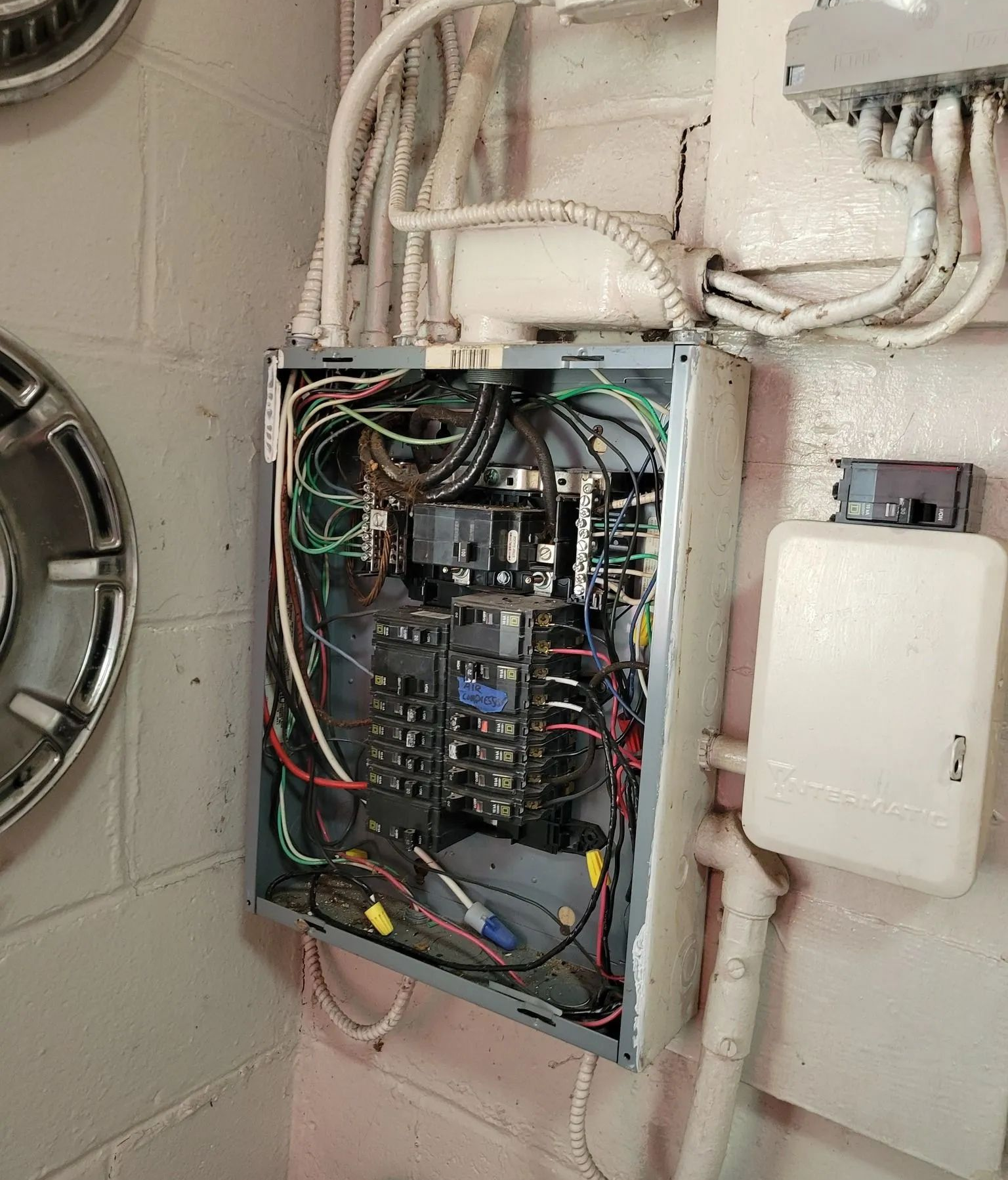
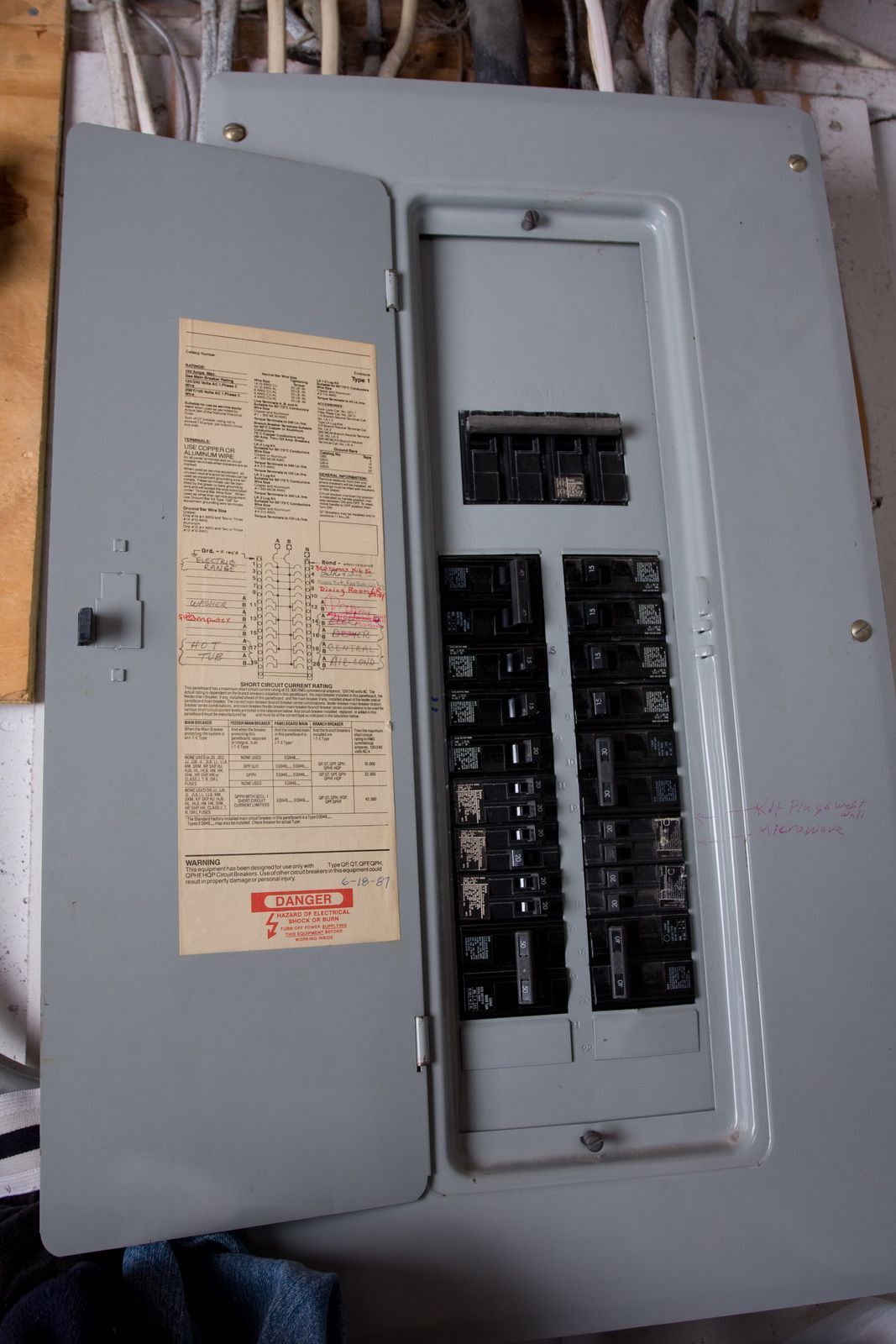
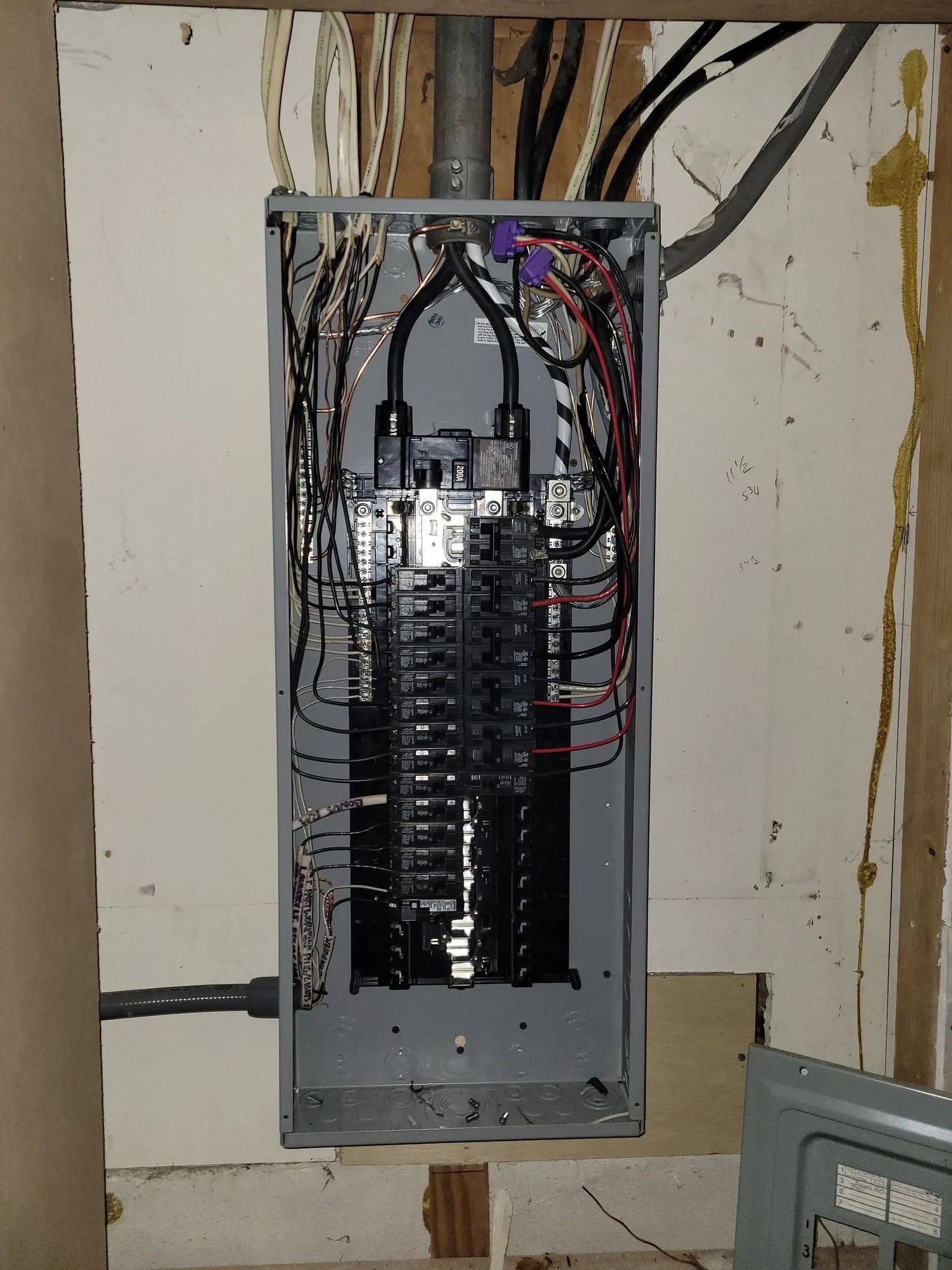
You walk into the kitchen to plug in the coffee maker and nothing happens. You try the toaster outlet next to it. Nothing. The lamp across the room still works fine, so it's not a whole-house problem, but three or four outlets in a row have gone completely dead. Out of habit, you go check the panel expecting to find a tripped breaker to flip back. Every switch is sitting exactly where it should be. Nothing tripped. Nothing looks wrong. And yet half your outlets act like the power was cut off with a knife.
Quick Answer: When several outlets lose power at once but the breaker hasn't tripped, the circuit itself is still energized — the break is happening somewhere between the panel and those outlets. The most common cause is a tripped or failed GFCI outlet feeding the "dead" outlets downstream, followed by a loose or failed connection at a backstabbed outlet, a corroded wire nut, or a loose neutral somewhere along the chain. Because outlets on a standard circuit are wired in a series, one bad connection point cuts off everything wired after it while leaving the breaker and the outlets before it working normally. An electrician traces the circuit outlet by outlet with a voltage tester to find the exact spot where power stops.
Why a Dead Outlet Doesn't Always Mean a Dead Breaker
Most people assume outlets and breakers fail together. They don't have to. A circuit breaker only trips when it senses too much current, a short, or a ground fault severe enough to shut the whole circuit down. If your outlets went dark because of a loose connection instead, there's nothing overloading the wire and nothing for the breaker to react to. The breaker just keeps supplying power to a wire that's no longer reaching the outlets past the break point.
Here's the part that trips people up: outlets on a standard branch circuit aren't each wired straight back to the panel on their own. They're wired in a chain, outlet to outlet, with power passing through one to reach the next. Think of it like a strand of old-style Christmas lights wired in sequence rather than each bulb running its own separate wire to the plug. If a connection fails at outlet number three, everything before it stays lit. Everything after it goes dark, even though the wire running to the panel never lost power at all.
That's exactly what you're seeing when "half the outlets" quit at once. They're not random. They're everything downstream of wherever the chain broke.
The GFCI Outlet Is Usually the First Suspect
In a huge number of these calls, the dead outlets trace back to a single GFCI receptacle somewhere in the house, and it isn't even in the room where the problem shows up. A GFCI outlet has two sets of terminals: line and load. Wire it on the load side, and that one outlet feeds power downstream to every regular outlet connected after it, protecting all of them from ground faults without needing a GFCI device at each location.
That's efficient wiring. It's also confusing when something goes wrong, because the outlet that failed and the outlets that went dead can be nowhere near each other. A GFCI in the garage can be feeding three outlets in the kitchen. A GFCI in a half-bath can be feeding an outlet on the back porch. If that GFCI trips, or the internal sensing mechanism inside it fails after years of use, every outlet on its load side goes dead at once, with zero indication at the outlets themselves.
Before assuming anything more serious, walk the house and press the reset button on every GFCI outlet you can find, including garages, bathrooms, exterior walls, and the kitchen. A GFCI that's tripped will usually show a small popped-out reset button or a lit indicator that's gone dark. A GFCI that's failed internally, on the other hand, won't reset at all, or it'll reset and immediately die again. That distinction matters. It tells you if you're dealing with a nuisance trip or a device that needs to be replaced outright.
A Failed Connection Somewhere in the Chain
If every GFCI in the house tests fine and the dead outlets are still dead, the break is a physical connection problem somewhere in that wire chain. A few specific culprits show up again and again.
Backstabbed Connections That Have Worked Loose
Many outlets installed from the 1970s through early 2000s use push-in backstab connections instead of screw terminals. Over time, heat cycling weakens the spring clip, allowing the wire to loosen, reduce contact, and eventually stop carrying power.
A Corroded Or Loosened Wire Nut In A Junction Box
Electrical splices depend on tight mechanical connections to carry current reliably. Moisture, age, or an improperly tightened wire nut can gradually weaken that connection, increasing resistance until the splice eventually fails completely.
A Broken Or Corroded Wire Itself
Less common, but possible in older Louisville-area homes where wiring has been disturbed during renovations, additions, or pest activity. A nicked or partially severed conductor may carry current for years before corrosion or movement finally breaks it completely.
A Screw Terminal That Was Never Fully Tightened
This often follows a DIY outlet replacement or fixture change. A loosely secured wire can carry current for months before vibration, heating, cooling, or normal movement gradually loosens the terminal enough to interrupt power.
Tip: Note exactly which outlets are dead and which ones next to them still work before an electrician arrives. That map of "working, working, dead, dead, dead" tells a technician which direction the chain runs and roughly where to start testing, which can cut real time off the diagnosis.
When It's a Loose Neutral Instead of a Dead Hot Wire
There's a less common but trickier version of this problem: a loose or corroded neutral connection somewhere in the circuit path, often back at the panel itself or at a splice a few outlets into the run. Every outlet needs both a hot wire delivering power and a neutral wire completing the circuit back to the panel. If the neutral connection loosens while the hot side stays intact, outlets downstream of that point can go completely dead, partially dead, or behave erratically, sometimes working when almost nothing else is plugged into the house and failing again once a few devices are drawing power.
This pattern is why guessing at home repairs on this kind of problem gets risky fast. A loose neutral can also let voltage back-feed in unexpected ways through connected devices, so poking around inside a box without confirming the circuit is fully de-energized is not something to attempt casually.
How an Electrician Actually Traces the Break
Finding the exact failure point isn't guesswork when you know the sequence to test in. An electrician typically works through it like this:
Confirm The Breaker And Panel Connection First
A quick check at the panel rules out a loose breaker connection or a failing breaker that's letting current through inconsistently rather than tripping cleanly.
Test Each Outlet In Sequence With A Voltage Tester
Starting from an outlet that's still working and moving toward the dead ones, a non-contact or plug-in tester shows exactly where voltage stops reaching the circuit. The last "live" outlet and the first "dead" one bracket where the problem lives.
Pull The Suspect Outlet Or Junction And Inspect The Connections
Once the general location is narrowed down, opening that box shows whether it's a backstabbed connection that's loosened, a corroded splice, or a wire that's simply broken.
Check Every GFCI On The Circuit's Load Path, Even Ones In Other Rooms
Since GFCI wiring isn't always obvious from the room you're standing in, tracing which device feeds which outlets is part of ruling that cause in or out early.
Warning: If you find warm outlet covers, discoloration around an outlet, a burning smell, or any sign of arcing while checking outlets yourself, stop and don't plug anything else into that circuit. Those signs point to a connection that's overheating rather than one that's simply gone loose, and an overheating connection in a wall cavity is a fire risk that needs attention before the circuit is used again.
Why This Shows Up More in Certain Homes
Age plays a bigger role here than most homeowners expect. Houses built or rewired between the 1970s and 1990s were far more likely to use push-in backstab connections as a standard installation shortcut, and those homes are now old enough that spring-clip connections are reaching the end of their reliable life. Add in Kentucky's swing between humid summers and freezing winters, which puts wiring and connections through real thermal expansion and contraction every year, and a marginal connection that held for two decades can finally let go.
Homes that have had additions, finished basements, or DIY outlet swaps over the years carry extra risk too. Every time a wire gets disconnected and reconnected by someone unfamiliar with proper torque and connection methods, there's a chance it goes back together a little looser than it should.
What Happens If You Leave It Alone
A dead run of outlets is inconvenient, but the bigger concern is what's happening at the failure point itself. A loose connection carrying current doesn't just stop working cleanly. It often arcs intermittently before it fails completely, generating heat at that exact spot every time something downstream draws power and current tries to push through a poor connection. That heat cycling is how a loose backstab connection or a corroded splice eventually becomes a scorched outlet box or, worse, a wall cavity fire that started somewhere nobody could see it.
Waiting also makes the diagnosis harder, not easier. If the connection is still marginal rather than fully open, testing can be inconsistent. It's easier for a technician to trace a break with a clear pattern than to chase an intermittent one that comes and goes depending on temperature or vibration in the house.
Frequently Asked Questions
Why would outlets go dead in a completely different room than the GFCI that's causing it?
GFCI load-side wiring follows whatever path the original electrician ran, not a room-by-room layout. A garage GFCI can feed an exterior outlet or one in an adjacent room, depending on the circuit's original electrical layout.
Can I just move my things to a different outlet instead of fixing this?
You can work around it short-term, but the connection problem won't resolve itself. Loose or corroded connections worsen with more heat cycling and current flow, so the outlets you're avoiding now pose a growing risk.
Is this something I can diagnose myself with a multimeter?
You can identify dead outlets and get a rough sense of where the chain breaks using a plug-in tester. Opening boxes to test live connections and find the exact failure point requires a licensed electrician.
Does a dead outlet mean the wiring inside the wall is damaged?
Not usually. Most failures happen at a connection point inside an outlet box or junction box, not the wire running through the wall itself. The fix is usually replacing a device or re-terminating a connection.
How is this different from a circuit that's simply overloaded?
An overloaded circuit trips the breaker because too much current pulls through it at once. This is the opposite: something has stopped passing current entirely, so nothing downstream gets any power no matter the demand.
Should I be worried if this keeps happening on the same outlets after they start working again?
Yes. An outlet that comes back on and then dies again usually means the connection is loose, making and breaking contact with vibration or temperature. That pattern is worth having checked before it fails entirely.
Locating the Break Brings Outlets Back to Life
A string of dead outlets beside a breaker that never tripped almost always traces back to one failed connection point in the wiring chain, not a mystery spread across the circuit. Once that connection is found and repaired, everything downstream comes back to life, since the wire itself was fine all along. Northrup Electrical Services LLC has spent over 24 years tracing these breaks across Shepherdsville and Louisville, KY homes, where older wiring methods and seasonal swings make loose connections a recurring issue.
That's the value of a
proper diagnosis over guesswork. It finds the exact point where the chain broke instead of leaving a loose connection to heat up again under load. Outlets that come back on and then go dark once more are a sign the fix wasn't complete, and that pattern is worth having checked before it becomes something bigger. A circuit that's been traced, tested, and repaired at the source stays reliable far longer than one patched with a quick outlet swap.